

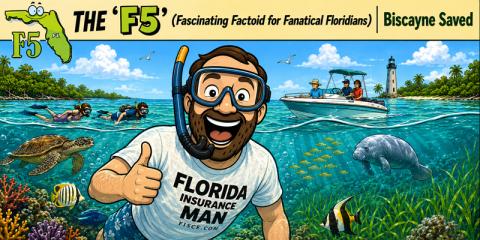
With an estimated 95 percent of its acreage underwater, Biscayne National Park attracts marine enthusiasts from around the world.
But it almost never happened.
In the 1950s, developers saw the undeveloped keys and surrounding reef/bay as a goldmine for hotels, roads and other developments. Plans were drawn up to dredge the bay to create a jetport. In 1961, 13 area landowners voted unanimously to create the City of Islandia. Plans for Seadade, a major industrial seaport, were announced in 1962.
Resistance started slowly but gained momentum and by the late 1960s calls for a National Park were getting loud. Facing a ground swell of public support for the park idea, landowners in the city of Islandia brought in bulldozers in an attempt to spoil the area. Dubbed "spite highway," the swath was six lanes wide and seven miles long, right down the middle of Elliott Key. Park proponents were not deterred. Congress, led by longtime Representative Dante Fascell, created Biscayne National Monument to protect "a rare combination of terrestrial, marine and amphibious life in a tropical setting of great natural beauty." President Lyndon B. Johnson signed the bill on October 18, 1968.